
Showing posts with label sports car. Show all posts
Showing posts with label sports car. Show all posts
Mar 18, 2015


Dec 31, 2012

May 18, 2010
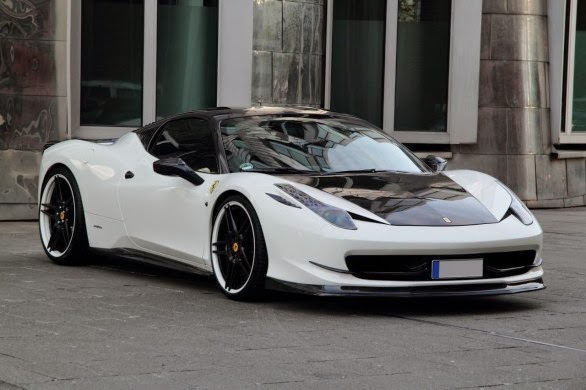
Ferrari California
Ferrari California - 2010
Through a fluke in timing or just plain luck, I'm fortunate enough to have now been behind the wheel of every single current Ferrari currently on sale. That's a rarity even for automotive journalists, and it's an honor I don't take lightly. Today's drive of the California marked a special occasion, since this was not just the only Ferrari I haven't driven, it's also an all-new kind of Ferrari.

The California is full of firsts: it's the first-ever front-mounted V-8-engined Ferrari, it's the first use of direct injection in a Ferrari, and it's Ferrari's first dual-clutch automated manual transmission. It's also the first Ferrari built on a modular architecture, and the first built on a new production line that is downright spooky in its modernity. I was able to tour the facility last month, and the California's production line is spotlessly clean, eerily quiet, and freakishly automated. On the one hand, computerized, precise mass production makes the California seem somehow less special; on the other, it ensures the highest level of quality. I think it's a worthwhile tradeoff, especially for a Ferrari that's inherently less special than some others.

Screeeetch -- less special? I mean the California no insult by that. It's the least expensive offering in Ferrari's stable, but that's only part of the reason why. The other reason is that I equate "special" with "insane." I, a certified automotive nutcase, adore the F430 for its insanity. I love the way it crackles and barks and screams. I love how it scares small children and grown men alike with its acoustic assault; how it accelerates and shifts with such violence that it renders its passengers hysterical. I love how its occupants are assaulted with the feel of every pebble on the road after luring them in with the sight and aroma of the world's finest materials.

Some, however, might find the F430 a bit much. For these people, Ferrari makes the California. The California is a softer, milder, less insane Ferrari. Ergo, it's less special to crazy people like me, but it's no less special in the real world. A grand tourer in the traditional sense of the word, Ferrari's hard-top convertible is smooth and luxurious. Its sound level and ride are sedate by Ferrari standards, and its cabin elegant and luxurious.
From the driver's seat, the experience is typical of today's Ferraris, which means a big red start button, a Mannetino controller on the steering wheel, and a paddle-shifted transmission. Upon first driving off, you notice that the suspension is supple, the gearchanges are smooth, and, like all modern Ferraris, the steering is Cadillac-overboosted and lacking in feel.

I drove the California in traffic for almost a hundred miles before I finally flung it into a corner-and became quickly aware that, like the 599 GTB and the 612 Scaglietti, it has two very distinct personalities. The California turns in with amazing immediacy-likely a result of having most of its weight between the axles. To that end, the V-8 is mounted completely aft of the front axle and the dual-clutch transmission is a transaxle mounted in the rear. Not much feedback comes through the steering wheel, and the brakes are somewhat wooden, but this is a car that knows how to dance. Chassis balance is spot-on perfect, serving up high-speed drifts that are easily controlled with the throttle.
The dual-clutch transmission shifts with no interruption in power; it's nothing like the old F1's brutal, neck-snapping full-throttle shifts. But I actually prefer the single-clutch transmission, at least until Ferrari's software engineers get around to a Version 2.0. Even though the dual-clutch box provides mostly seamless shifts, making for more comfortable driving, it's not quite as well programmed as the old F1 box, and a few glitches are apparent. (Read my blog on Transmissions for more detailed information about the Ferrari dual-clutch transmissions.)

Like all modern Ferraris, the California's suspension is able to filter out small road surface irregularities without compromising body control. Lateral body control (lean in corners) feels, from the cockpit, to be nonexistent, but the suspension does allow a lot of brake dive

The 453-hp, 4.3-liter V-8 is deeper in pitch and less sonorous in note than the F430's engine. The California's V-8 still uses a Ferrari's trademark flat (180-degree) crankshaft, so it sounds like two manic four-cylinders instead of the deep, distinctive burble that you get from 90-degree V-8s. The California's exhaust note is certainly impressive, but it achieves that more by virtue of its volume than its pitch, especially from inside the car. That's exacerbated when the transmission is in automatic mode-the lack of interruption in power during shifts makes the engine's note change sound just like a conventional automatic. I think Ferrari needs to program in a very quick misfire during shifts to interrupt the exhaust note momentarily. Other sports car manufacturers do this.

Speaking of fuel delivery interruption, one other area that could benefit from additional programming is at very light throttle openings. All modern cars cut fuel to the engine when you lift completely off the throttle-and the transition between very light load cruising and fuel-cutoff is quite rough in the California. It's especially noticeable when you're trying to coast down a hill or when you're in stop-and-go traffic, as it makes for considerable jerkiness. On the other hand, Ferrari has done a fantastic job of hiding the ticking sounds that high-pressure injectors make at idle. The injectors are located under a big, red, and gorgeous intake plenum, and the underside of the hood is lined with a sound-deadening material that makes the ticking almost completely inaudible. And lest we forget the important part-the California's big, wide, flat torque curve. This is a V-8 that never feels soft; it pulls hard from idle to its 8000-rpm redline.

The California's navigation system is the same Harman/Becker unit used by Chrysler. It's a decent touch-screen unit with great usability, but the screen's resolution is a generation or two behind the best, so the map itself is of limited use. The sound quality is only fair (it doesn't come close to the JBL sound system in the Scuderia Spider 16M, for example), but the system offers easy-to-use Bluetooth phone integration, a hard drive for music storage, aux-in jacks, and full iPod integration.
The California also comes with two-zone climate control and air conditioning that kept the cabin cool even in 105-degree desert sun. The seats are supportive, and without exception every interior material is top-rate. The folding hard top refuses to rattle or creak, and even though it required a few ticks longer than Ferrari's quoted fifteen-second time to open or close, it's quick enough to operate if you're the first to arrive at a red light. The mostly aluminum structure is so incredibly robust that at no time did I notice any scuttle shake or chassis flex.

The California looks best in darker colors, which help hide its homely rear end. The stacked exhaust pipes supposedly made more room for underbody airflow management, but they're not pretty. I also don't care for the frowning horizontal opening that contains the supplemental rear lights. Fortunately, the front of the California is far better resolved, although the car appears tall and narrow, rather than having the wide and low stance that one expects from a sports car. The long front overhang is very reminiscent of the Maserati GranTurismo, a more elegantly styled piece of automotive jewelry. As always, styling is subjective-you might look at the photos and love it.
Visibility to the rear is acceptable, and what can't be seen is detected by standard parking sensors. The trunk is easily large enough, at least with the roof up, to accommodate a large suitcase. The California's rear seats are 911-sized (meaning two things: the same size as the back seats in a Porsche 911, and that you'd have to dial 9-1-1 to have emergency personnel extract any adult who tries to squeeze into the back.) The rear seats can be replaced with a beautifully finished cargo shelf at no cost, but in either configuration, the space can be used for additional storage, and the California even offers a trunk pass-through for long items.
All of the usability means the California can easily be driven daily, and for long distances. That is, of course, the very purpose of a Gran Turismo. This Ferrari is a few programming issues short of true perfection-but the important stuff is all there. The California hits 60 mph in about four seconds, tears up back roads with impeccable balance, and cruises quietly, smoothly, and comfortably. It's an F430 with a Vulgarity Reduction Program, which is exactly what Ferrari set out to achieve and exactly what its buyers will expect. People like me will still prefer an F430, but those of sound mind, body, and pocketbook needn't look past the California in their search for a Maranello masterpiece.

May 17, 2010
Peugeot RCZ - 2010
Peugeot RCZ - 2010
Picture the scene. A one-off, almost irreplaceable concept car has been let loose on the public road by the man who built it. Inside are two people, neither of whom is an employee of the company whose car it is. The driver (me) is enjoying the power and the pep, revelling in the fact that this concept car, unlike many, not only works, but works convincingly well.

People point, jaws drop – for some have seen this neat little coupé in the motoring press and can't believe they are now seeing it for real. I am trying to get past a slow cement lorry, and splatters of cement have formed on the Peugeot RCZ's unique, show-car bonnet. It's a surreal moment.
The car is returned to its creator. You must make a production version, I say, and so does everyone else who encounters it. What better way to rekindle Peugeot's lost art of style and driving fun?
 |
Now, two years later and encouraged by the positive vibes, Peugeot has done just that. It looks almost exactly like the concept, right down to the double-bubble roof and rear window shaped to match. The bold rails that form the roofline were aluminium in the concept car and are aluminium-clad in the real thing, and you can have the roof in real carbonfibre if you like. There are changes from the concept, but they are mere details.
As a concept, it was known as 308 RCZ, because it was based on the 308 hatchback, but with wheels set further apart on the axles. This is still true, and the dashboard is still clearly 308-derived, albeit with posh leather and a smart clock in place of the central air vent. The air of luxury tells us this is a "premium" coupé – costing from £20,450 to £22,750 – perfectly placed to compete with the Audi TT whose profile it obviously resembles. But look past the leather upholstery and the metallic accents and you'll find hard plastics for the middle section of door trim and the glovebox. That's a pity.
The RCZ does look exotic from the outside, though. It's a neat, taut coupé with minimal rear seats and a self-raising rear spoiler, and in black with black wheels and the black chrome roof-arch option it looks particularly purposeful. Three engines will be offered, a 2.0-litre turbodiesel with 163bhp for the CO2-watchers, and a pair of 1.6-litre, direct-injection, turbo petrol engines with 156 or 200bhp. Part of a joint venture between Peugeot and BMW, similar engines are also found in Minis, but this new 200bhp unit uniquely combines variable valve timing and lift with a twin-scroll, fast-response turbocharger.
 |
Most recent tales of sporting Peugeots have been laced with regret at a once-great talent lost. But Peugeot's newest family cars (308, 3008 and 5008) do show a return to form with their combination of precise steering and a supple ride. So I am optimistic as I settle into the seat of a diesel RCZ and head for the hills.
The dashboard may be 308-like but the driving position is lower-set and more sporting. Straight away some optimism is rewarded, because this RCZ is smooth, quiet, supple over bumps, and accurate in the steering. The engine pulls with the gusto expected of a modern turbodiesel, yet it spins more freely than most and sounds as if it enjoys the process. This is a promising combination of engine and sports coupé, but something is missing. Could it be just a little sharper when turning into a tight bend? Could it give its driver just a little more chance to balance the flow of power and steering on an interesting road? Rehabilitation isn't complete yet.
And so to the RCZ 200 THP, with that new turbo engine and a standard-fit Sport pack. This includes a slightly smaller steering wheel which should clearly be standard, because it's one reason for this car's greater flickability on tight, twisty roads. Another is the lighter engine, a third is that the front suspension uses stronger pivots on a stronger subframe and so feels crisper and more direct in its responses.
 |
And yes, this is it. This is the Peugeot that puts things right, the Peugeot that augurs well for the next hot hatchback that the company has hinted is on its way. The engine pulls with crisp-edged energy, and the way this RCZ copes with one of the best driving roads I have ever experienced (in the mountains west of Bilbao) will stay with me a long time. This is one entertaining car, a car which involves you in the art and science of automotive dynamics in the way a TT just does not.
I'd have one over any TT, because it's just as well made, it's more fun and it costs less. Convinced? You should be.
 |
While Peugeot can't be accused of creating a hasty imitation, the similarities between the RCZ and TT are remarkable. The French car began as a concept unveiled at the 2007 Frankfurt show. Turning it into a production car took three years. It's built on the platform of a volume-production European C-segment model, in this case the 308. Every one of these steps treads in the faded tracks of the TT. Price is the only point where Peugeot departs from the blueprint. Going on sale across Europe through May, the RCZ will wear price tags 20- to 25-percent lower than equivalent TT models.
This is a big discount, but the RCZ does not lack for style. It's easily the most convincing and cohesive car turned out by Peugeot's studios in recent years. The cab-forward proportions are pleasingly attractive, hinting at the presence of something powerful in the coupe's tail, even though in reality its four-cylinder engine resides up front. The stepped waistline provides a launching pad for a pair of athletically muscular haunches, while genuine aluminum garnishes the artful arc of pillars and roofline. And the rear of roof features a double-bubble form that continues through the rear glass. While vision to the rear and sides is good, the A-pillars can make properly sighting some corners impossible, and the front of the car is pretty much invisible from the driver's seat.
RCZ's interior is less original than its exterior. The Peugeot's circular air vents are reminiscent of the TT in particular and the neat stitching of the leather trim and upholstery of Audi in general. Like the TT, the rear seats aren't designed for full-size humans. Peugeot describes them as intended for "occasional use." Still, when flipped forward, the coupe's already reasonable 11 cubic feet of cargo capacity is doubled. One of few differences between RCZ and TT is that the Peugeot doesn't have a liftback. There's a normal trunk instead, with a two-position spoiler built into its lid.
 |
Peugeot used to enjoy a stellar reputation for dynamic excellence, artfully blending ride and handling. The legend has lost its luster over the past decade, as the French futilely attempted to imitate the German chassis setup recipe. Instead they produced cars that lacked autobahn-speed handling precision, often combined with poor low-speed ride.
But renaissance is a French word, and the RCZ shows Peugeot knows what it means. Despite its relatively humble suspension design -- simple struts at the front, even simpler twist beam at the rear -- the coupe delivers an appetizing blend of grippy balance and bump-blotting ride, especially on 18-inch wheels and the standard spring and damper combination. With optional 19-inch wheels and sports suspension package the firmer rebound damping reduces comfort, but boosts cornering ability. The rack and pinion steering isn't particularly feelsome, but is quick and sharp, and the brakes are able to take a reasonable amount of punishment before turning -- like many a fine French cheese -- soft and smelly.
The RCZ's best engine does encourage brake abuse. Although closely related to the engine of the Mini (Peugeot parent PSA cooperated with Mini-owner BMW in its development), its 197-horsepower 1.6-liter direct-injection four with twin-scroll turbo version was French-developed. Peugeot engineers cite the RCZ's intercooler and Valvetronic variable valve timing and lift system tuning as being major points of difference. This is a good engine, combining a sweet rush of turbo thrust with exemplary refinement. Quick as opposed to manic, it delivers strong real-world performance.
Two other engines are available. One is a 154-horsepower low-tech 1.6-liter gasoline (minus direct injection and other refinements) that's the only RCZ engine teamed with an optional six-speed automatic transmission. The 161-horsepower 2.0-liter turbo diesel (like the high-power 1.6-liter gasoline) is offered only with a reasonably slick six-speed manual.
Peugeot obviously sees the RCZ as a turning point for the brand. It's the first Peugeot ever to not have the company's usual three- or four-digit designation with one or two zeroes in the middle. It's also the first to feature a redesigned version of Peugeot's rampant lion badge. And derivative though the RCZ may be, it truly does deserve to stand apart from Peugeot's recent parade of mainstream mediocrity.
 |
Model: Peugeot RCZ Price: From £22,750 (range starts at £20,450). On sale now Engine: 1,598cc, four cylinders, 16 valves, turbo, 200bhp at 5,500rpm, 206lb/ft at 1,770rpm Transmission: Six-speed gearbox, front-wheel drive Performance: 146mph, 0-62 in 7.6sec, 39.8mpg official average, CO2 159g/km for more info check here
Specification
| 2010 Peugeot RCZ | |
| Base Price | $32,000-$38,000 (est) |
| Vehicle layout | Front engine, FWD, 4-seat, 2-door coupe |
| Engine | 1.6L/197-hp 203-lb-ft direct-injection turbo DOHC 16-valve in-line 4 |
| Transmission | 6-speed manual |
| Curb weight | 2800-3000 lb (mfr) |
| Wheelbase | 102.8 in |
| Length x width x height | 168.8 x 72.6 x 53.5 in |
| 0-62 mph | 7.5 sec (mfr est) |
| EPA city/hwy econ | Not rated |
| On sale in U.S. | No |
src="http://pagead2.googlesyndication.com/pagead/show_ads.js">
May 15, 2010
911 GT2 RS
911 GT2 RS: scariest car ever?


Palms are clammy. Buttocks are clenched. The mood, in short, is tense.
Porsche has just released details on the 911 GT2 RS – its fastest, most powerful road car ever – and we are frankly a little uneasy.
See more pics of the GT2 RS
To remind you, the normal 911 GT2 is already one of the most monstrous cars on the road, with a 523bhp twin-turbo six feeding the rear wheels and a reputation for going sideways and never coming back. They call it The Widow-maker.
And now Porsche has made The Widow-maker even more evil. Here come the headline stats: the 911 GT2 RS produces 611bhp – yep, still all through the rear wheels – weighs 1,370kg and will go from standstill to 124mph in under ten seconds.
That’s 88bhp more powerful and 70kg lighter than the GT2. That’s 8bhp more than the Carrera GT. That’s a power-to-weight ratio of 435bhp per tonne. Sheesh.
Porsche says the RS will, in the hands of someone far, far braver than us, lap the Nuburgring in 7m18s - 19 seconds quicker than the very, very fast 911 Turbo S.
0-60mph? 3.4 seconds – point-two quicker than the GT2. Top speed is 205mph. Those are some entirely wall-licking numbers.
The extra power comes from an increase in boost pressure to the GT2’s 3.6-litre twin turbo engine, while the weight loss is down to an intensive carbon fibre diet: the GT2 RS’s front and rear spoilers, bonnet and rear arch vents are made of the stuff.
There’s extra downforce from a taller rear wing and redesigned front spoiler. In the cabin, you get lightweight bucket seats, fabric door pulls and lots of alcantara.
Porsche is keen to point out that the GT2 RS is a deeply green car, returning 23.7mph and emitting just 284g/km of CO2 – better figures than the GT2 despite the increased power.
Just 500 GT2 RSs will be built, with prices starting at – one more big number for you – a whopping £164,000. That’s about £33,000 more than a regular GT2. We suspect potential owners shall not care.
The GT2 RS won’t be formally unveiled until August. We’ll get our hands on one as soon as possible and give you the full verdict. We are a little tiny bit entirely terrified at this prospect.
Sam Philip
Now watch the GT2 RS hit the track:
Lexus LFA - 2010
The Lexus LFA,

...is a two-seat exotic sports coupe produced by Lexus as a concept car, "halo" vehicle, racing prototype, and production model.It is the second model in the F marque line of performance vehicles from Lexus, following the IS F. Three concept versions have been shown, each debuting at the North American International Auto Show with the LF-A designation as part of the LF Series concept line. The first LF-A concept premiered in 2005, followed in 2007 by a second LF-A with a more completely furnished interior and exterior. The third version of the LF-A, a roadster model, premiered in 2008. The production model, trademarked LFA, was shown at the Tokyo Motor Show in October 2009. The production Lexus LFA features a new V10 engine and a carbon fiber-reinforced polymer (CFRP) body. CFRP materials account for 65 percent of the LFA's body composition by mass.The LFA is scheduled to go into production in late 2010, with a projected run of 500 vehicles at the base price of US$375,000. A circuit-tuned variant is scheduled for 2012.

In February 2000 the LF-A began development as a supercar project codenamed P280, which was intended to showcase the performance capabilities of Toyota Motor Corporation and its Lexus marque.The first prototype was completed during June 2003. Prototypes of the LF-A were spotted regularly undergoing testing at Nürburgring since October 2004,the famous motorsport race track in Nürburg, Germany. Numerous test vehicles had been equipped with automatic retractable rear wings, and carbon ceramic brake discs.
Lexus began taking orders for the LFA supercar on October 23, 2009. Buyers will be selectively chosen by Lexus in the second quarter of 2010. Production will begin in December 2010 as a 2011 model. Only 500 total LFA models will be made worldwide, with only 20 produced each month. Each car will be custom ordered to the customer's specifications, and will cost an estimated US$375,000, depending on options and customization.Following the LFA's release at the Tokyo Motor Show, Lexus unveiled a website with a 'LFA configurator' which allowed users to select exterior and interior colors, brake caliper colors, seats, steering wheel leather, and other interior designs. In total, there are over 30 billion possible configurations. Each LFA will be hand-built by a dedicated production team of engineers and specialists at Toyota's Motomatchi plant in Aichi, Japan. In the North American market 150 LFAs will be sold through a two year lease program much like the Ferrari F50. This is to prevent owners from reselling the vehicle for a profit. Racing driver Scott Pruett was hired to give test drives to interested buyers, demonstrating the vehicle's capabilities at Auto Club Speedway. The Lexus division of Toyota Motor USA will stop taking orders at the end of 2009. In the European market buyers order their LFA through a single Lexus dealer located in Park Lane, London where it is purchased outright.[46] During LFA production, each vehicle will receive a plaque which is individually numbered, indicating the unit's place in the production run. Each LFA V10 engine will also bear the signature of the specialist who assembled it. With 20 units produced monthly, production of the entire LFA run will last from December 2010 to December 2012.

Air is fed directly from beneath the hood through a visible slit passing into a dual stage variable intake manifold and then into ten individual throttle bodies before finally exiting from a dual stage titanium muffler.The LFA's engineers attempted to make the engine sound like that of a Formula One car with high revs, while at the same time maintaining typical Lexus reliability and vibration control. A V10 engine was selected over an equivalent displacement V8 engine for its higher revs, and over a V12 for its lower reciprocating mass, allowing for more rapid engine response. Lexus claims their engine can rev from idle to its redline in 0.6 seconds and an analog tachometer needle could not accurately track the LFA's changes in engine speeds. This necessitated the use of digital tachometer which can instantly display engine speed. The engine reportedly weighs less than the manufacturer's own 3.5-liter 2GR-FE V6 engine.The powerplant gives the LFA a power-to-weight ratio of 5.9 lb/hp and enables it to reach a top speed of around 202 mph (325 km/h). Like the IS F Yamaha co-developed the engine cylinder heads. The engine exceeds Euro V emissions. The engine is installed with a front mid-engine placement.[50] According to Chief Engineer Haruhiko Tanahashi a front engine layout was selected instead of a mid engine layout as it is inherently more forgiving dynamically, affording less experienced drivers a wider safety net.
...is a two-seat exotic sports coupe produced by Lexus as a concept car, "halo" vehicle, racing prototype, and production model.It is the second model in the F marque line of performance vehicles from Lexus, following the IS F. Three concept versions have been shown, each debuting at the North American International Auto Show with the LF-A designation as part of the LF Series concept line. The first LF-A concept premiered in 2005, followed in 2007 by a second LF-A with a more completely furnished interior and exterior. The third version of the LF-A, a roadster model, premiered in 2008. The production model, trademarked LFA, was shown at the Tokyo Motor Show in October 2009. The production Lexus LFA features a new V10 engine and a carbon fiber-reinforced polymer (CFRP) body. CFRP materials account for 65 percent of the LFA's body composition by mass.The LFA is scheduled to go into production in late 2010, with a projected run of 500 vehicles at the base price of US$375,000. A circuit-tuned variant is scheduled for 2012.
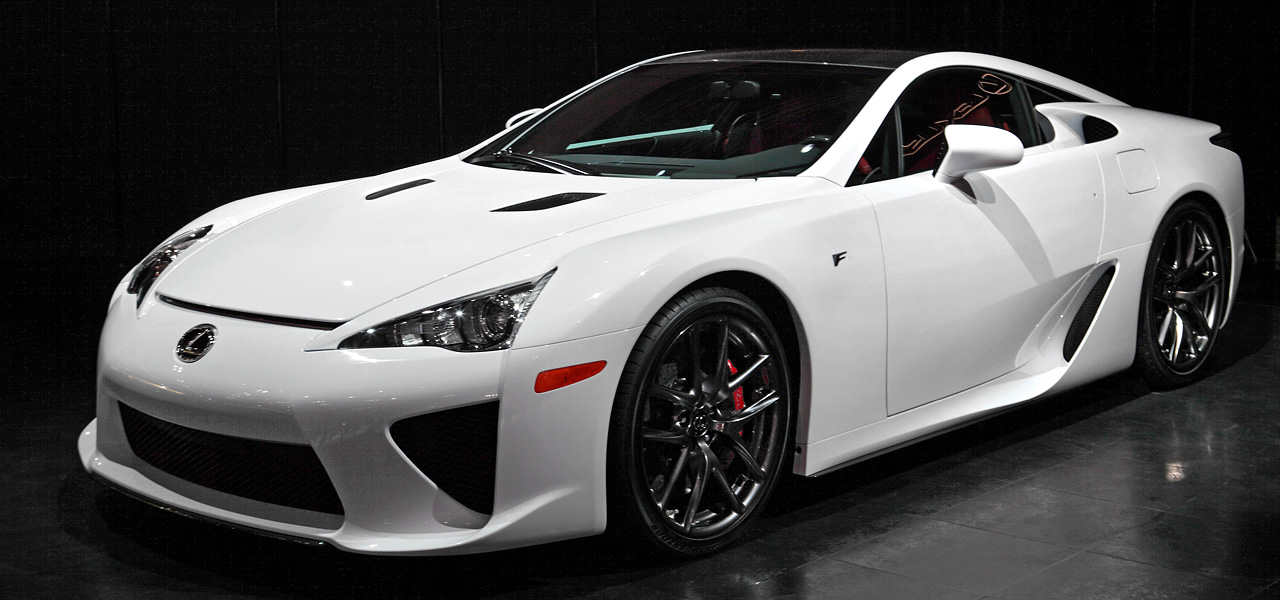
In February 2000 the LF-A began development as a supercar project codenamed P280, which was intended to showcase the performance capabilities of Toyota Motor Corporation and its Lexus marque.The first prototype was completed during June 2003. Prototypes of the LF-A were spotted regularly undergoing testing at Nürburgring since October 2004,the famous motorsport race track in Nürburg, Germany. Numerous test vehicles had been equipped with automatic retractable rear wings, and carbon ceramic brake discs.
Lexus began taking orders for the LFA supercar on October 23, 2009. Buyers will be selectively chosen by Lexus in the second quarter of 2010. Production will begin in December 2010 as a 2011 model. Only 500 total LFA models will be made worldwide, with only 20 produced each month. Each car will be custom ordered to the customer's specifications, and will cost an estimated US$375,000, depending on options and customization.Following the LFA's release at the Tokyo Motor Show, Lexus unveiled a website with a 'LFA configurator' which allowed users to select exterior and interior colors, brake caliper colors, seats, steering wheel leather, and other interior designs. In total, there are over 30 billion possible configurations. Each LFA will be hand-built by a dedicated production team of engineers and specialists at Toyota's Motomatchi plant in Aichi, Japan. In the North American market 150 LFAs will be sold through a two year lease program much like the Ferrari F50. This is to prevent owners from reselling the vehicle for a profit. Racing driver Scott Pruett was hired to give test drives to interested buyers, demonstrating the vehicle's capabilities at Auto Club Speedway. The Lexus division of Toyota Motor USA will stop taking orders at the end of 2009. In the European market buyers order their LFA through a single Lexus dealer located in Park Lane, London where it is purchased outright.[46] During LFA production, each vehicle will receive a plaque which is individually numbered, indicating the unit's place in the production run. Each LFA V10 engine will also bear the signature of the specialist who assembled it. With 20 units produced monthly, production of the entire LFA run will last from December 2010 to December 2012.
Engine
The Lexus LFA is powered by a 72° 4.8-liter V10 engine equipped with dual VVT-i carrying the 1LR-GUE designation with a maximum output of 560 PS (412 kW) delivered at 8,700 rpm. Its maximum torque output of 354 lb·ft (480 N·m) arrives at 6,800 rpm, 90 percent of which is available from 3,700 rpm. The engine redlines at 9,000 rpm, but with a fuel cutoff set at 9,500 rpm, and is constructed using forged aluminum pistons, forged titanium connecting rods, and solid titanium valves. Dry sump lubrication prevents engine oil starvation through high speed corners and lowers the engine's center of mass.
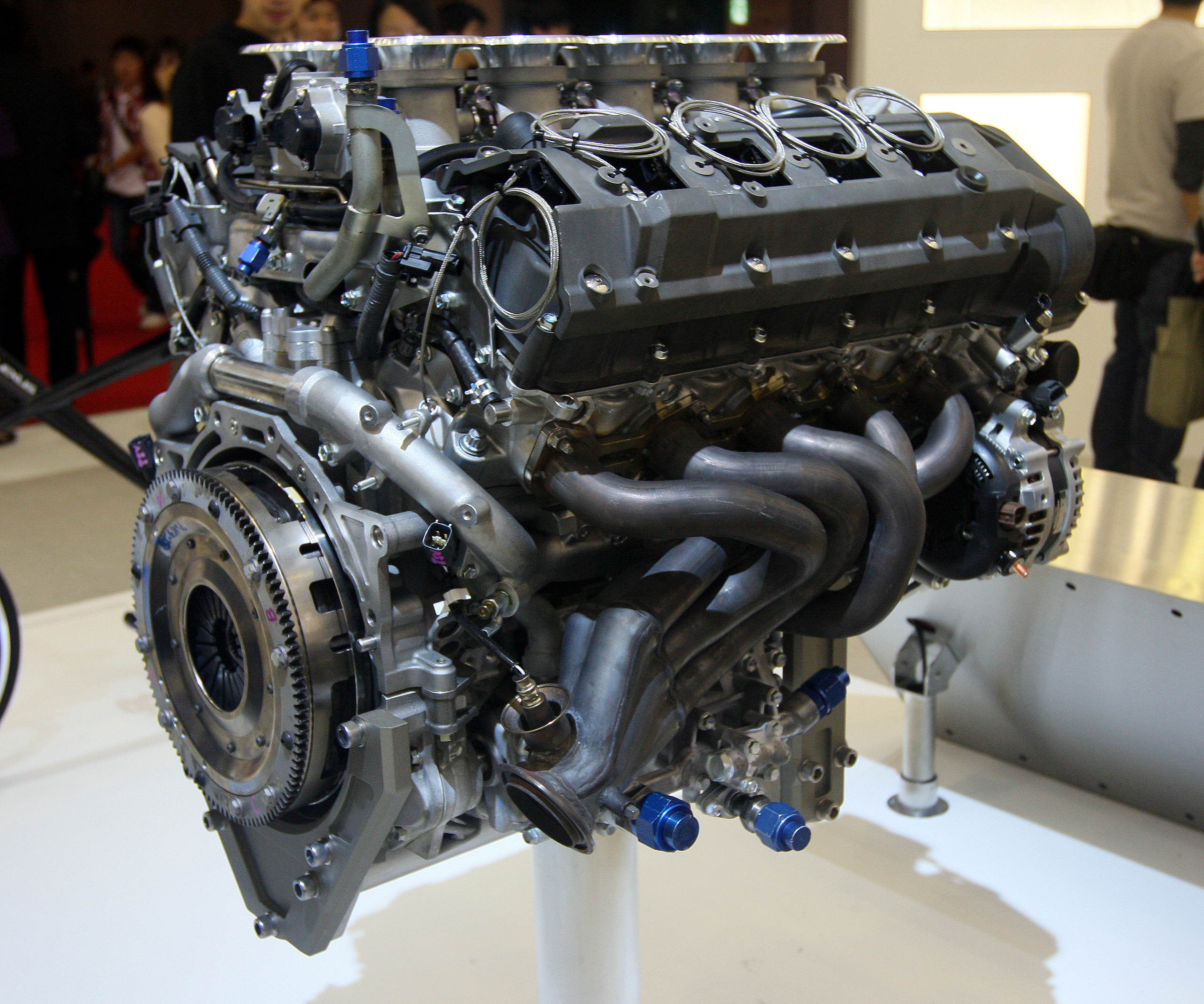
Air is fed directly from beneath the hood through a visible slit passing into a dual stage variable intake manifold and then into ten individual throttle bodies before finally exiting from a dual stage titanium muffler.The LFA's engineers attempted to make the engine sound like that of a Formula One car with high revs, while at the same time maintaining typical Lexus reliability and vibration control. A V10 engine was selected over an equivalent displacement V8 engine for its higher revs, and over a V12 for its lower reciprocating mass, allowing for more rapid engine response. Lexus claims their engine can rev from idle to its redline in 0.6 seconds and an analog tachometer needle could not accurately track the LFA's changes in engine speeds. This necessitated the use of digital tachometer which can instantly display engine speed. The engine reportedly weighs less than the manufacturer's own 3.5-liter 2GR-FE V6 engine.The powerplant gives the LFA a power-to-weight ratio of 5.9 lb/hp and enables it to reach a top speed of around 202 mph (325 km/h). Like the IS F Yamaha co-developed the engine cylinder heads. The engine exceeds Euro V emissions. The engine is installed with a front mid-engine placement.[50] According to Chief Engineer Haruhiko Tanahashi a front engine layout was selected instead of a mid engine layout as it is inherently more forgiving dynamically, affording less experienced drivers a wider safety net.
Performance
Official and tested performance specifications for the Lexus LFA are as follows:[53]
| Engine type | 1LR-GUE 72° V10 | 0-60 mph (97 km/h) | 3.6 sec. (official, w/o launch control) |
|---|---|---|---|
| Valvetrain | DOHC 4-valves/cylinder, dual VVT-i | 0-100 km/h (62 mph) | 3.7 sec. (official) |
| Displacement | 4,805 cc (293.2 cu in) | 0-100 mph (160 km/h) | 7.8 sec. (tested) |
| Bore x Stroke | 88 mm × 79 mm (3.5 in × 3.1 in) | 0-130 mph (210 km/h) | 12.9 sec, (tested) |
| Compression Ratio | 12.0:1 | 0-150 mph (240 km/h) | 18.3 sec. (tested) |
| Power | 560 PS (411.9 kW; 552.3 hp) @ 8700 rpm | 1⁄4 mi (400 m) | 11.8 sec. (@ 124 mph (200 km/h)) |
| Torque | 480 N·m (354.0 ft·lbf) @ 6800 rpm | Braking | 156 ft (48 m) (70 mph (110 km/h)-0) |
| Curb weight | 1,480 kg (3,263 lb) | Weight distribution | 49.8:50.2 (front:rear) |
| Power-to-weight | 5.9 lb/hp | Lateral acceleration | 1.00 G (200 feet (61 m) skidpad) |
| Transmission | 6-speed ASG, 9000 rpm redline | Top speed | 326 km/h (203 mph) |
Chief Engineer Haruhiko Tanahashi mentioned during the world's press at the Nürburgring in Germany that the LFA has lapped the Nürburgring Nordschleife in "better than 7 minutes 20 seconds", although no further specifics were given to the record lap.The LFA appeared on Top Gear in January 2010, when Richard Hammond drove the car and had rave reviews of it. The LFA's power lap of 1.22.8 was the quickest wettest lap ever recorded on the Top Gear test track; it was 3 seconds faster than the nearest wet lap which was the 4WD Lamborghini Gallardo. However, it was noted that the LFA cost 3 times more than the Gallardo, and is £130,000 more than the Ferrari 599 but not faster than it; Jeremy Clarkson also noted that the 202mph LFA costs 6 times more than the 193mph Nissan GTR but is not 6 times faster. In response, Evo's review of the LFA pointed out that the performance of "a Bugatti Veyron is not 12 times more than the GT-R", with reviewer Chris Harris observing that no cars are 6 times more than a GT-R either. Car and Driver also concluded in its review of the LFA and its performance that the carbon-fiber supercar rated as a "bargain" compared to the more expensive Ferrari Enzo and Mercedes-Benz SLR McLaren. The magazine track-tested the LFA in March 2010, finding the car quickest in manual sport mode, and recording a 0-60 mph time of 3.7 seconds and a quarter mile of 11.8 seconds at 124 mph.
Subscribe to:
Posts (Atom)